Observation of Giant River Otters (river wolves) in the Manu Lakes
We know that traveling all the way to Manu and not seeing giant river otters would be frustrating. It’s one of the most sought-after wildlife experiences. We promise to explain where they are observed, the best season to see them, and how to maximize your chances.
🌿 What Is Giant River Otter Observation in Manu?
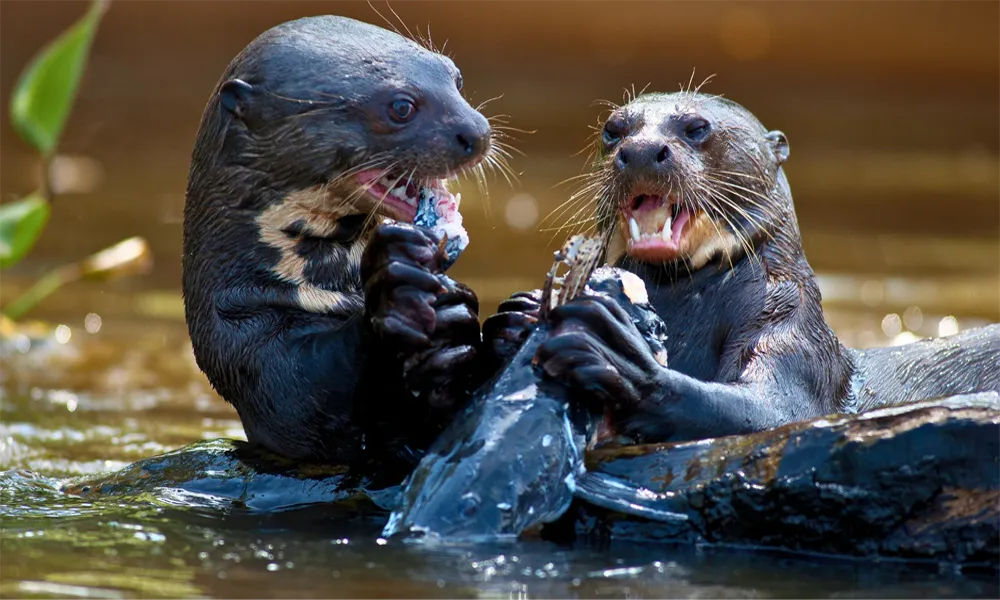
The giant river otter (locally known as “river wolf”) is one of the most iconic mammals of Manu National Park.
They are mainly observed in:
- Oxbow lakes (locally called cochas)
- Lagoons formed by former river meanders
- Calm areas with abundant fish
Manu hosts one of the healthiest populations of this species in South America.
🦦 Why Is Manu One of the Best Places to See Giant River Otters?
🌎 1. Strong Environmental Protection
Manu is one of the most strictly protected natural areas on the continent.
🐟 2. Ideal Ecosystem
- Abundant fish supply
- Low human disturbance
- Large, isolated oxbow lakes
👨🏫 3. Specialized Guides
Tours in the Reserved Zone include guides trained in wildlife tracking and animal behavior.
🕒 What Is the Best Time of Day to See Giant River Otters?
🌅 Mornings (Best Time)
- 6:00 am – 9:00 am
- Peak fishing activity
🌇 Afternoons
- 4:00 pm – 6:00 pm
- Less intense activity than mornings
Giant river otters are highly social and active animals, which increases sighting probabilities.
📅 Best Months to See Giant River Otters in Manu
☀️ Dry Season (May – October)
- Better visibility
- Lower water levels
- Greater concentration in lagoons
👉 Most recommended season.
🌧 Rainy Season (November – April)
- Sightings still possible
- Higher water levels
- Greater dispersion
🔎 Manu as a Giant River Otter Destination
| Destination | Probability | Protection Level | Experience |
|---|---|---|---|
| Manu | Very High | Very Strict | Authentic |
| Tambopata | High | Moderate | More Accessible |
| Pantanal (Brazil) | Medium | Variable | More Open |
Manu stands out for stable population density and lower tourism pressure.
⚙️ How Does Oxbow Lake Observation Work?
🚤 Access
- Silent boat transfer
- Engines turned off near the lagoon
- Observation from boat or viewing tower
⏳ Observation Time
- 1–2 hours per outing
- Dependent on natural behavior
Silence is essential to avoid disturbing the otter family group.
💰 What Does the Tour Include?
✅ Included
- Land and river transportation
- Professional bilingual guide
- Life jacket
- Entry to the Reserved Zone
- Meals and accommodation
❌ Not Included
- Travel insurance
- Professional photography equipment
- Tips
- Additional beverages
👉 Tours shorter than 4 days rarely reach the deeper oxbow lakes.
🌎 Pro Tips for International Travelers
📸 Photography
- Minimum 300mm lens recommended
- Fast shutter speed (action shots)
- Humidity protection
🌦 Climate
- High humidity
- Possible short rain showers
- Quick-dry clothing recommended
🏥 Health
- No altitude sickness
- Sun protection
- Stay hydrated
🎒 Essential Gear
- Binoculars
- Waterproof dry bag
- Strong insect repellent
- Lightweight hat
❓ Frequently Asked Questions
- Is seeing giant river otters guaranteed?
Wildlife can never be guaranteed, but during the dry season probabilities are high.
- Are they dangerous?
No. They are curious but maintain a natural distance.
- Do I need prior experience?
No. Just willingness to wake up early and remain quiet.