Day and Night Hikes in Manu: What to See and Difficulty Level
We know you may be wondering whether the hikes in Manu will be too demanding… or if you will actually see wildlife. That’s a common concern. We promise to explain what you can see during the day and night, the real difficulty level, and how to prepare.
🥾 What Are the Day and Night Walks in Manu?
During a tour in Manu National Park, hiking is the main activity for observing wildlife and flora in their natural habitat.
Walks take place in:
- Primary rainforest trails
- Flooded forests
- Clay licks and Amazonian lagoons
Always accompanied by a professional guide.
🌞 Day Walks: What Can You See?
🐒 Most Common Wildlife
- Monkeys (capuchin, howler, squirrel monkeys)
- Macaws and parrots
- Sloths
- Toucans
- Exotic insects
- Tapir or jaguar footprints
🌿 Experience
- Humid jungle trails
- Uneven terrain
- Wildlife spotting with binoculars
- Ecological interpretation from the guide
👉 Difficulty level: Moderate – accessible for active travelers.
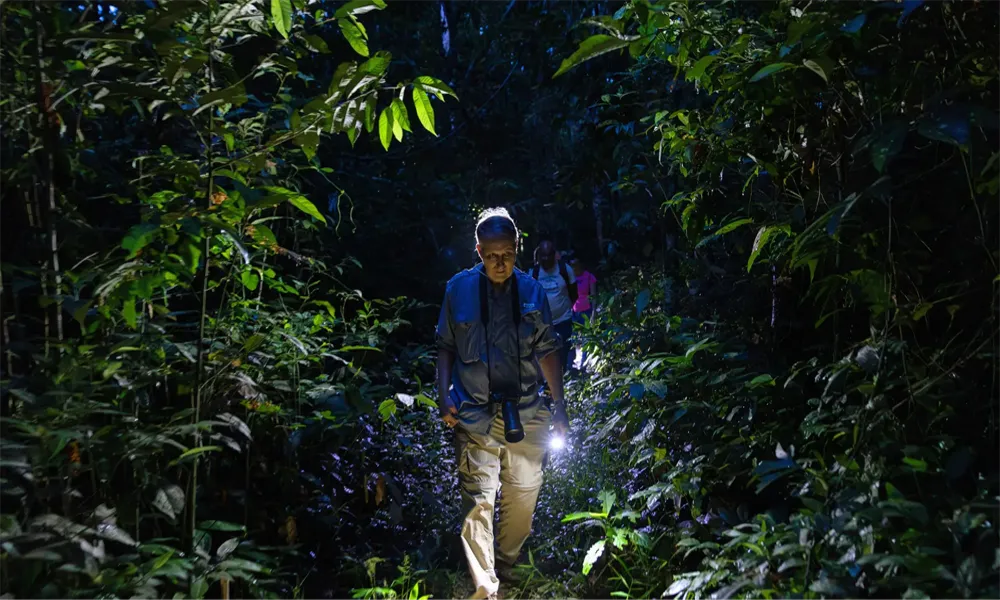
🌙 Night Walks: Are They Worth It?
They are one of Manu’s most impressive experiences.
🦉 Nocturnal Wildlife
- Fluorescent frogs
- Tarantulas
- Bioluminescent insects
- Caimans (from the boat)
- Owls
- Bats
👉 Difficulty level: Easy to Moderate
Walks are slow-paced, in small groups, using headlamps.
⚙️ How Do the Walks Work?
⏰ Average Duration
- 1 to 3 hours per outing
- Slow pace
- Frequent observation stops
👥 Group Size
- 6 to 10 people
- Bilingual guide
- Lodge logistical support
💪 Real Difficulty Level
🔹 Terrain
- Wet dirt trails
- Exposed roots
- Mud during rainy season
🔹 Physical Condition Required
- Ability to walk 2–3 hours
- No previous trekking experience required
- Suitable for travelers over 10 years old with good mobility
- Not high altitude. No altitude sickness risk.
💰 What Do the Walks Include?
✅ Included
- Professional bilingual guide
- Rubber boots (in most tours)
- Flashlights for night walks
- Access to authorized areas
❌ Not Included
- Specialized personal gear
- Travel insurance
- Tips
👉 Longer tours (5–7 days) increase wildlife sighting chances.
🌎 Pro Tips for International Travelers
🎒 Essential Gear
- Waterproof boots (or use lodge-provided boots)
- Personal headlamp
- Strong insect repellent
- Lightweight long-sleeve shirt
- Breathable pants
🌦 Climate
- Constant high humidity
- Sudden rain possible
- Bring a light poncho
📷 Photography
- Camera with good zoom
- Humidity protection
- Dry bag for equipment
🏥 Health
- No altitude sickness
- Stay hydrated
- Slow pace reduces fatigue
🔎 Manu vs Other Amazon Destinations
| Destination | Difficulty | Wildlife Probability | Intensity |
|---|---|---|---|
| Manu | Medium | Very High | Authentic |
| Iquitos | Low–Medium | High | More touristic |
| Puerto Maldonado | Low | Medium | Accessible |
❓ Frequently Asked Questions
- Are night walks dangerous?
No. They are conducted with guides and strict safety protocols.
- Do I need trekking experience?
Only basic physical condition.
- Is participation mandatory?
No, but it is the highlight of the tour.