Signal & Wi-Fi on the Salkantay Trek
Where You’ll Be Connected — and Where You Won’t 🏔️📵
The Salkantay Trek crosses remote mountain terrain where connectivity is not a priority. If you need to know exactly where you’ll have signal, when you can message family, and where Wi-Fi is reliable, here’s the full breakdown by section — plus practical tips.
🗺️ Connectivity by Trek Section
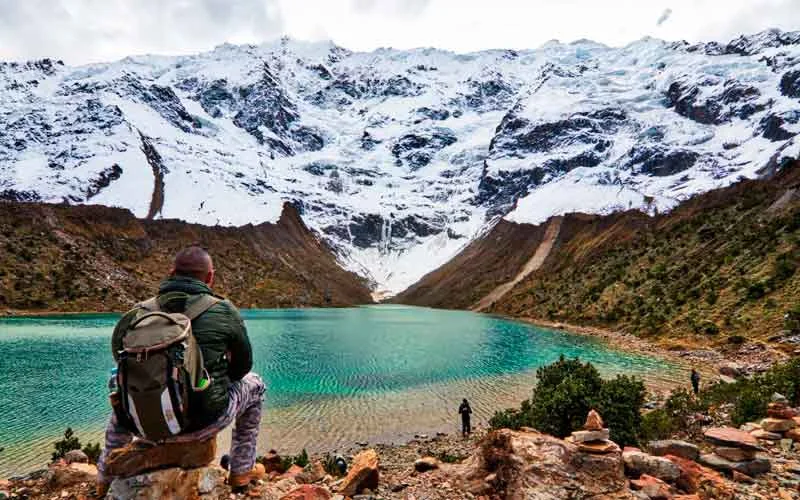
🏔️ 1️⃣ High Mountain Zone: Soraypampa & Salkantay Pass
📵 Mobile signal: Almost nonexistent
🌐 Wi-Fi: Not available
📶 Mobile data: Doesn’t work
🔋 Battery drain: High if not on airplane mode
Mountains block signal completely. Even if your phone briefly shows one bar, it won’t be stable enough for calls or proper messaging.
👉 Recommendation: Turn on airplane mode and save battery.
🌄 2️⃣ Descent Toward Cloud Forest
📶 Mobile signal: Intermittent
🌐 Wi-Fi: Not available on trail
📲 Short messages: Occasionally possible
In some higher viewpoints you may catch signal for a few minutes. It’s unpredictable and not reliable for long calls.
🌿 3️⃣ Santa Teresa Area
📶 Mobile signal: Moderate to good
🌐 Wi-Fi: Available in some lodges
⚡ Electricity: Stable
This is where many trekkers:
- Notify family they’re safe
- Upload photos
- Check emails
- Recharge devices
Wi-Fi speed varies and may slow at night when many guests connect.
🏨 4️⃣ Aguas Calientes (Machu Picchu Pueblo)
📶 Mobile signal: Stable
🌐 Wi-Fi: Available in hotels and restaurants
📲 Video calls: Usually possible
Aguas Calientes is the most reliable connectivity point of the trek.
Here you can:
- Confirm flights
- Upload content
- Make long calls
- Manage reservations
📡 Mobile Operators: What Works Best?
Coverage depends on:
- Your carrier
- Whether you’re roaming
- SIM type
In general:
- Local Peruvian SIM cards perform better than international roaming
- Major national operators have stronger rural coverage
- Virtual carriers may have weaker signal
👉 Tip: If partial connectivity matters, buy a local SIM in Cusco before starting.
🌐 Wi-Fi at Camps: What to Expect
🏕️ Standard Camps
- No Wi-Fi
- No fixed internet
- Do not depend on connection
🌟 Premium Camps / Domes
- May offer limited Wi-Fi
- Often powered by generator or satellite
- Slow speeds
- Can fail if many users connect
Salkantay is not designed as a connected trekking route — and that’s part of its appeal.
🔋 Battery Management Without Signal
When there’s no coverage, phones constantly search for signal — draining battery faster.
Smart Strategy:
✔ Use airplane mode while hiking
✔ Turn signal on only when necessary
✔ Bring a power bank
✔ Lower screen brightness
✔ Close background apps
📥 Digital Prep Before the Trek
Before leaving Cusco:
- Download offline maps
- Save train tickets as PDFs
- Screenshot your Machu Picchu entry ticket
- Save a digital passport copy
- Download hotel confirmations
Never rely on internet access to retrieve essential documents.
📊 Quick Comparison Table
| Zone | Mobile Signal | Wi-Fi | Reliability |
|---|---|---|---|
| High mountain | Very low | No | Very low |
| Jungle descent | Intermittent | No | Low |
| Santa Teresa | Moderate | Yes | Medium |
| Aguas Calientes | High | Yes | High |
🧭 Safety Without Connectivity
No signal does not mean unsafe.
On organized tours:
- Guides know the route
- Emergency protocols exist
- Some operators carry alternative communication devices
- Multiple groups hike the route daily
Mountain trekking does not depend on mobile coverage.
🧠 Is Disconnecting Actually Better?
Many travelers report that during Salkantay they:
- Focus more on landscapes
- Socialize more with their group
- Sleep better
- Feel mentally refreshed
The digital disconnection becomes part of the experience.
🏁 Final Takeaway
During the Salkantay Trek, mobile signal is limited or nonexistent in high mountain areas and improves significantly only near Santa Teresa and especially in Aguas Calientes.
Plan offline, manage battery carefully, and embrace the chance to disconnect from screens and reconnect with nature 🏔️✨