The Real Difficulty of the Salkantay Trek vs. the Inca Trail in 2026: Fitness Level, Terrain, and a Complete Guide to Help You Decide
We know that before booking, you want to be sure you can complete the Salkantay Trek. We promise to explain the real difficulty without exaggeration. Here you’ll see how demanding it is compared to the Inca Trail, what the terrain is like, what fitness level you need, and whether it’s truly worthwhile for your fitness level in 2025.
What is the Salkantay Trek and why is it considered challenging?
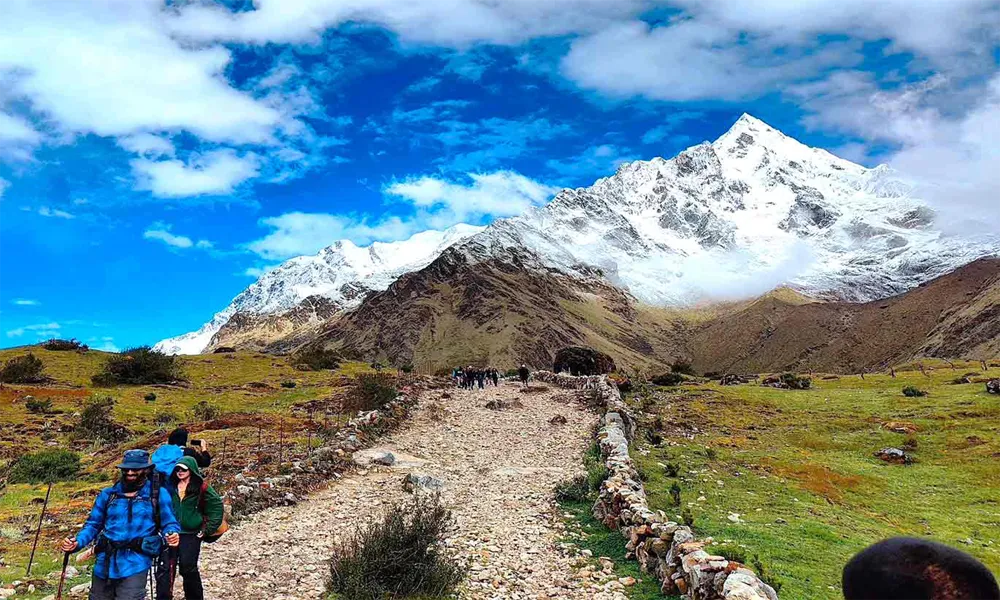
The Salkantay Trek is one of the most spectacular routes to Machu Picchu, traversing landscapes dominated by the imposing Salkantay Mountain.
Its reputation for being “difficult” is based primarily on:
- Altitude above 4,600 m (15,000 ft)
- Prolonged elevation changes
- Long daily hikes (6–8 hours)
- Changeable high-altitude weather
It’s not technical and doesn’t require climbing, but it is physically demanding.
How does the difficulty actually work day by day?
Day 1 – Gradual Acclimatization
Start with a gradual ascent. Your body begins to feel the altitude.
Day 2 – The Toughest Day
Crossing the Salkantay Pass:
- Highest altitude of the route
- Prolonged and steady climb
- Reduced oxygen levels
- Intense cold and wind
This day makes the difference between an easy hike and a challenging experience.
Day 3 – Long Descents
Although descending seems simple, the descents are punishing for your knees and ankles.
Days 4 and 5 – Transition to Jungle
The terrain becomes more humid and warmer, but less demanding in terms of altitude.
Terrain Type: What to Really Expect Under Your Boots
The Salkantay Trek is not a uniform trail. You will find:
- Trails of packed earth
- Rocky and uneven sections
- Loose stones in high areas
- Steep slopes
- Muddy sections during the rainy season
- Rural roads in the jungle
Unlike the Inca Trail, there aren’t as many constant stone steps, but there is more elevation gain and greater exposure to the elements.
Direct comparison of difficulty: Salkantay vs. Inca Trail
| Factor | Salkantay Trek | Inca Trail |
|---|---|---|
| Maximum altitude | 4,600 m | 4,215 m |
| Elevation gain | High | Medium |
| Stairs | Few | Many |
| Exposure to the elements | High | Moderate |
| Overall level | Moderate – High | Moderate |
The Salkantay is physically more demanding due to its altitude and elevation gain. The Inca Trail is more tiring due to the repeated steps.
Actual fitness level required
✔ Active person (exercises 3–4 times per week)
Can be done with basic fitness.
✔ Regular athlete
Will enjoy it without major difficulties.
⚠ Sedentary person
Needs at least 6–8 weeks of prior training.
❌ People with heart or respiratory problems
Require prior medical evaluation.
It’s not an extreme trek, but it shouldn’t be underestimated.
Quick Facts Table
| Metrics | Salkantay Trek |
|---|---|
| Average Price | USD 450 – 900 |
| Duration | 4–5 days |
| Difficulty | Moderate – High |
| Hours of hiking/day | 6–8 hours |
| Best time | April – October |
| Rainy season | November – March |
Transactional value: Does the price justify the challenge?
The cost reflects mountain logistics and professional support.
What a tour typically includes:
- Certified guide
- Transportation from Cusco
- Camps or domes
- Meals during the trek
- Entrance to Machu Picchu
- Logistical coordination
What is not usually included:
- Trekking poles
- Tips
- Travel insurance
- Personal equipment
- Optional bus at Machu Picchu
The price-to-experience ratio is excellent if you’re looking for high-altitude landscapes and less crowded terrain than the Inca Trail.
Recommended physical preparation (practical plan):
6–8 weeks prior
- Long hikes with a backpack
- Hill climbs or stair ascents
- Squats and leg exercises
- Consistent cardio (cycling, jogging)
2 weeks prior
- Practice in the footwear you will be using
- Reduce intensity to avoid injuries
Essential Pro-Tips for foreigners:
🫁 Smart acclimatization
Spend at least 48 hours in Cusco before starting the trek.
🧥 Real thermal layers
Nights can be below freezing at high camps.
👟 Waterproof boots
The soles should have good grip on loose rocks and mud.
🎒 Lightweight backpack
Don’t carry unnecessary weight; use porters if the pack allows.
💧 Constant hydration
Altitude dehydrates you faster than you might think.
🌞 Sun protection
Intense UV radiation, even on cold days.
Common mistakes that increase the difficulty:
- Lack of prior training
- Underestimating the altitude
- Wearing new, unbroken shoes
- Not sleeping well before the high-altitude pass
- Not communicating symptoms to the guide
Is the Salkantay Trek right for you?
The Salkantay Trek is ideal if:
- You’re drawn to dramatic mountain landscapes
- You’re looking for fewer restrictions than the Inca Trail
- You’re willing to train beforehand
It might not be ideal if:
- You prefer a more structured route
- You don’t tolerate extreme cold well
- You’re not comfortable with long elevation changes
The actual difficulty of the Salkantay Trek in 2025 is moderate to high, mainly due to the altitude and elevation gain. It doesn’t require technical skills, but it does require physical preparation and respect for the mountains.
If you train, acclimatize, and choose a professional tour operator, it’s a completely achievable experience and one of the most breathtaking routes to Machu Picchu.