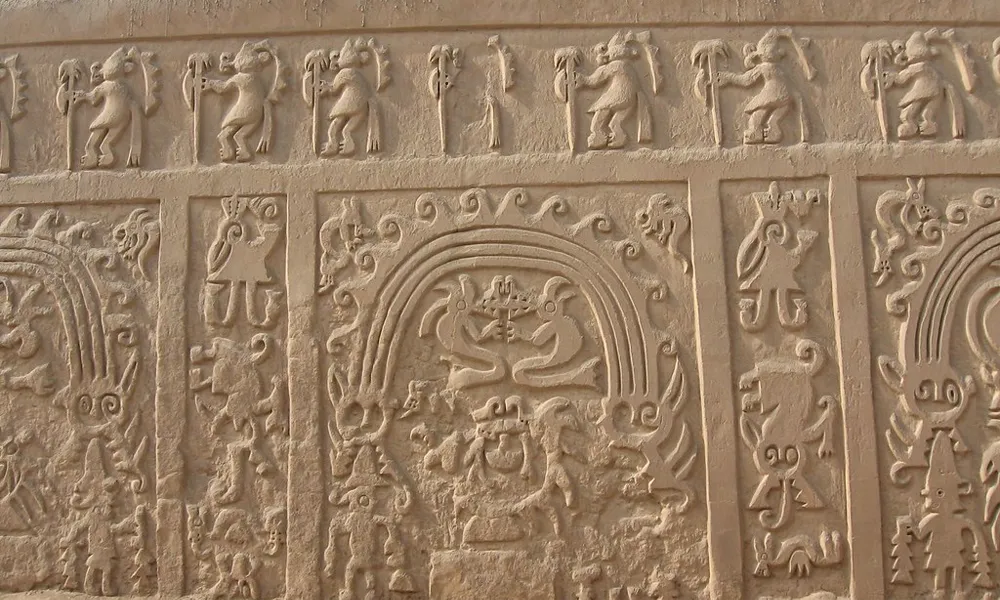
The Huaca del Dragón, also known as Huaca Arco Iris, is one of the most enigmatic adobe temples on Peru’s northern coast. It is located in the district of La Esperanza, just 5 km from the center of Trujillo. Its name comes from the high-relief friezes depicting repeated arches—interpreted as rainbows—accompanied by serpents and zoomorphic figures symbolizing fertility, rain, and water, essential elements for survival in the coastal desert.
This temple, built by the Chimú culture around the 11th century, is one of the structures that predates the splendor of Chan Chan, the Chimú capital declared a World Heritage Site by UNESCO. Although less well-known than the Huaca de la Luna or Chan Chan, this site is a jewel of pre-Hispanic iconography and a must-see for those wishing to delve into the agricultural and religious worldview of the peoples of northern Peru.
History and Cultural Significance
The Huaca del Dragón originates from the Chimú culture, which dominated much of Peru’s northern coast before the arrival of the Incas. It was conceived as a ceremonial center linked to agricultural fertility.
The adobe perimeter walls—up to 6 meters high—enclose two main platforms connected by ramps. On the upper level, fourteen deposits or warehouses were found, likely housing offerings, agricultural products, and religious objects.
The reliefs depict arches interpreted as rainbows, associated with rain. Below the arches, two-headed serpents can be seen, accompanied by the figure of the ceremonial tumi, reinforcing the connection with agricultural rituals and the cycle of life. For the Chimú, the rainbow was a symbol of the renewal of water in arid lands, and its worship ensured the prosperity of corn, bean, and squash crops.
With the expansion of the Inca Empire in the 15th century, the huaca was integrated into the new Andean order, but it retained its ritual character. After the Spanish conquest, it was abandoned and covered by sand for centuries, until it was studied in the 20th century.
How to get to Huaca del Dragón
- From downtown Trujillo: It’s just a 15-minute taxi ride from the Plaza de Armas.
- By public transportation: Several bus lines bound for La Esperanza stop a few blocks from the site; just indicate “Huaca Arco Iris.”
- By private car: It’s easily accessible from the Panamericana Norte highway and signposted urban avenues.
The huaca is very close to other archaeological attractions such as Huaca La Esmeralda and the Chan Chan complex, allowing for a complete tour in half a day.
Climate and best time to visit
Trujillo enjoys a temperate desert climate, with temperatures between 17°C and 26°C year-round. Rainfall is almost nonexistent, allowing you to visit it in any season. However, the months from April to October offer clearer days and more pleasant skies for photography.
- Recommended clothing: light and cool, with a light jacket for the breeze.
- Essentials: sunscreen, a hat, and water to hydrate.
Hours and Prices
- Visiting hours: Tuesday to Sunday, 9:00 a.m. to 4:00 p.m. (last recommended entry at 3:30 p.m.).
- Admission:
- Adults: S/. 10 to S/. 11 (reference ticket, subject to update).
- Students and children: discount with valid ID.
- First Sunday of each month: free admission for Peruvians (Open Museums program).
- Combined ticket: usually includes the Chan Chan Site Museum and other nearby huacas.
Tip: It is recommended to purchase the Chan Chan integrated ticket, valid for 2 days, which provides access to several archaeological sites for a low price.
What to See at Huaca del Dragón
- Perimeter Wall: An imposing adobe structure that encloses the huaca.
- Ceremonial Ramp: The main entrance that connects to the upper platform.
- Upper Platform: An area where the offering deposits are located.
- Relief friezes: Figures of rainbows, serpents, and fertility symbols.
- Ceremonial Plaza: A space where collective offerings were made.
The complete tour lasts approximately 30 to 45 minutes, and a local guide is recommended to understand the symbolism of each figure.
Recommended Activities and Tours
- Guided tour of Huaca del Dragón with symbolic interpretation.
- Half-Day Archaeological Tour: Huaca del Dragón + Huaca La Esmeralda + Chan Chan + Huanchaco.
- Full-day archaeological tour: includes the Huaca de la Luna (Moche) in the morning and the Chimú circuit in the afternoon.
- Archaeological photography: Capture the friezes in the early morning or at dusk, when the shadows enhance the relief.
Travel Tips
- Visit early in the morning or after 3:00 PM to avoid the intense sun.
- Bring cash in soles, as ticket offices don’t always accept cards.
- Do not touch or lean on the adobe walls; the material is very fragile.
- Use a taxi or secure apps to get there from the city center.
- Combine your visit with a stop at the Chan Chan Site Museum, which contextualizes the iconography.
Recommended Hotels in Trujillo
- Costa del Sol Trujillo Centro: across from the Plaza de Armas, ideal for those who want to be close to the historic center.
- Casa Andina Premium Trujillo: in the El Golf area, with modern facilities and a pool.
- Costa del Sol Wyndham Trujillo (Golf): elegant and tranquil setting, with easy access to Huanchaco and Chan Chan.
- DoubleTree by Hilton Trujillo: modern hotel with a rooftop pool and international service.
Local Gastronomy
Trujillo is a culinary paradise. Don’t miss:
- Shámbar: traditional soup served on Mondays, made with wheat, legumes, meats, and spices.
- Seco de cabrito (goat stew with beans): emblematic dish of the north.
- Frito trujillano (Trujillo fritter): fried pork accompanied by yuca and criolla zarza (criolla zarza).
- Ceviche al norteño (northern-style ceviche): fresh, spicy, and with sweet potato.
Recommended restaurants: El Mochica, Mar Picante, Big Ben in Huanchaco, and El Rinconcito de Vallejo for typical dishes.
Frequently Asked Questions
How long does it take to tour the huaca?
Between 30 and 45 minutes.
Can I visit with children or seniors?
Yes, although the terrain is sandy; comfortable shoes are recommended.
Is it necessary to hire a guide?
It is not mandatory, but it is highly recommended to understand the symbolism of the reliefs.
What time of year is best to visit?
All year round, thanks to Trujillo’s temperate climate.