Corpus Christi in Cusco: Faith, Culture, and Living Tradition in the Andes
Corpus Christi in Cusco is one of Peru’s most representative religious festivals and a living expression of the Andean-Catholic syncretism that characterizes the region. Celebrated every year in June, this festival combines Catholic devotion with ancient Inca traditions, becoming one of the most important cultural and religious events in the Cusco calendar.
When is Corpus Christi celebrated in Cusco?
Corpus Christi in Cusco is celebrated 60 days after Easter Sunday, usually during the first twenty days of June. In 2025, the main festival will take place on Thursday, June 19, although celebrations extend for several days before and after the main date, with masses, processions, rituals, and traditional activities.
What does the celebration of Corpus Christi entail?
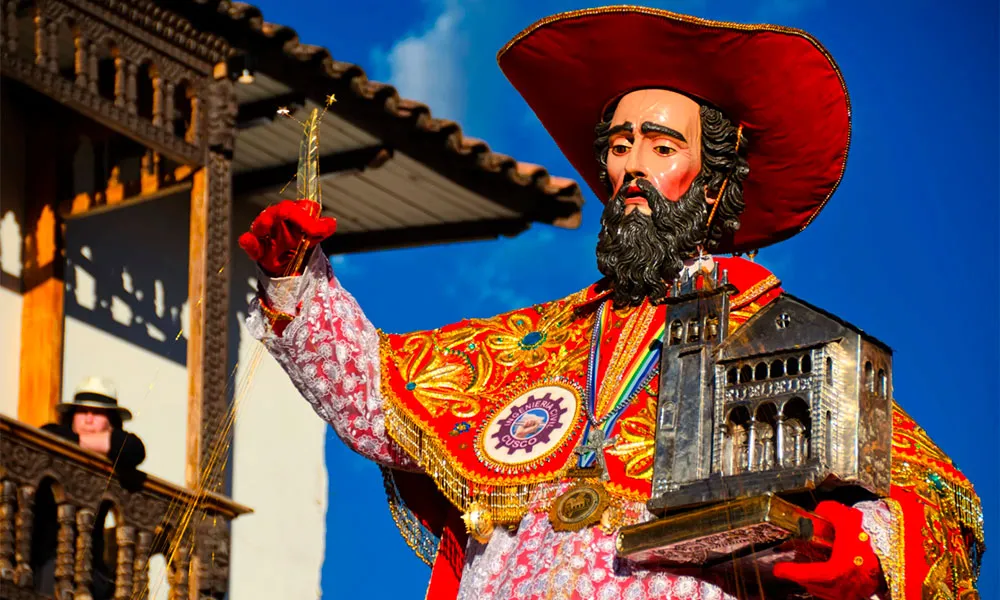
During Corpus Christi in the city of Cusco, a large religious procession brings together 15 saints and virgins from different parishes in the Historic Center and traditional neighborhoods. These images are carried on finely decorated wooden floats to the Cusco Cathedral, where they remain in veneration for eight days.
The festival includes three key moments:
1. The Entrance of the Saints (the previous Wednesday)
The images arrive at the Plaza de Armas accompanied by their faithful, marching bands, dancers, and religious authorities.
2. The Grand Procession (Corpus Christi Thursday)
After the main Mass in the Cathedral, the saints are paraded around the Plaza de Armas, one by one, in a solemn parade full of symbolism.
3. The Octave (a week later)
The images return to their temples amidst another popular procession, bringing the festival to a joyful close.
Chiri uchu, a typical Corpus Christi dish
During this religious festival, chiri uchu is eaten, one of the most emblematic dishes of Cusco cuisine. Its name means “cold chili pepper” in Quechua, and it is served cold as a symbol of the winter season.
Traditional chiri uchu includes:
- Baked guinea pig
- Cecina (dried alpaca or pork)
- Boiled chicken
- Chorizo, cheese, flour tortilla
- Corn, mountain cancha (corn)
- Seaweed (cachiyuyo)
- Rocoto pepper and fish roe
This dish represents the fusion of Andean and Spanish ingredients and is especially enjoyed in Plaza San Francisco, where food fairs are held throughout the celebration.
Where is the best place to experience Corpus Christi in Cusco?
The main locations for the festival are:
- The Cusco Cathedral: the central point where all the sacred images gather.
- The Plaza de Armas: the main space for the procession and a gathering place for visitors and worshippers.
- Traditional neighborhoods such as San Blas, San Pedro, and Santiago: where saints are prepared and community celebrations are held.
Religious Syncretism: A Legacy of Two Worlds
Corpus Christi in Cusco is a clear example of the intersection of the Andean worldview and Christianity. Many scholars agree that this festival overlapped with ancient Inca celebrations honoring the apus (mountain spirits) and the sun, adapting to the Catholic faith imposed during the colonial period. Even so, Andean elements such as the music of the quenas and drums, the colorful costumes, and community devotion are still present.
Saints of Corpus Christi in Cusco
- Today, 15 saints and virgins participate in this celebration:
- Saint Jerome from the parish of the district of San Jerónimo
- Saint Christopher from the parish of San Cristobal
- Saint Blaise from the parish of San Blas
- Saint Peter from the parish of San Pedro
- Saint Anthony from the parish of San Cristobal
- Saint Sebastian from the parish of the district of San Sebastian
- Saint Barbara from the parish of the district of Poroy
- Saint Anne from the parish of Santa Ana
- Saint Joseph from the parish of Belén
- Saint James the Apostle from the parish of Santiago
- Our Lady of the Nativity from the parish of Almudena
- Our Lady of the Remedies from the church of Santa Catalina
- Our Lady of Bethlehem from the parish of Belén
- Our Lady of the Immaculate Conception, also called “La Linda” (The Beautiful One), from the Cathedral
- Our Lady of the Purified Virgin from the parish of San Pedro